
What Sewer Gas Actually Is
Sewer gas is a mixture of gases produced as organic waste breaks down, and its two main troublemakers are hydrogen sulfide and methane. Hydrogen sulfide creates the classic rotten-egg odor and is detectable by the human nose at extremely low concentrations, which is actually useful — your nose is an early warning system.
Methane is odorless but displaces oxygen in enclosed spaces and can be explosive at high concentrations. In a typical home with a minor trap problem, methane levels stay far below dangerous thresholds, but a major line break in a confined basement or crawl space deserves serious caution and fast professional attention.
Health Effects of Sewer Gas Exposure
At the low levels common with household drain odors, sewer gas typically causes headaches, nausea, dizziness, and eye or throat irritation. These symptoms usually clear quickly once you get fresh air, but they are your body telling you the exposure should not continue.
Higher concentrations of hydrogen sulfide are genuinely dangerous. Prolonged exposure can cause difficulty breathing, and at very high levels the gas deadens the sense of smell — so a smell that suddenly disappears after being overwhelming is not a sign the problem fixed itself. If anyone feels faint, confused, or has trouble breathing, leave the area immediately and seek medical help.
Common Household Causes in Bartlett Homes
The most common cause is also the simplest: a dry trap. Every drain has a U-shaped trap that holds water as a seal against sewer gases, and in rarely used drains — guest bathrooms, basement floor drains, laundry sinks — that water evaporates over weeks. Running water into the drain for a minute usually solves it instantly.
Blocked vent stacks are the next suspect. Your plumbing vents through the roof to equalize pressure, and in winter, frost or a bird nest can cap the vent. When vents cannot breathe, draining water pulls air through traps instead, breaking the seal and letting gas in. A plumber can clear a vent from the roof in one visit.
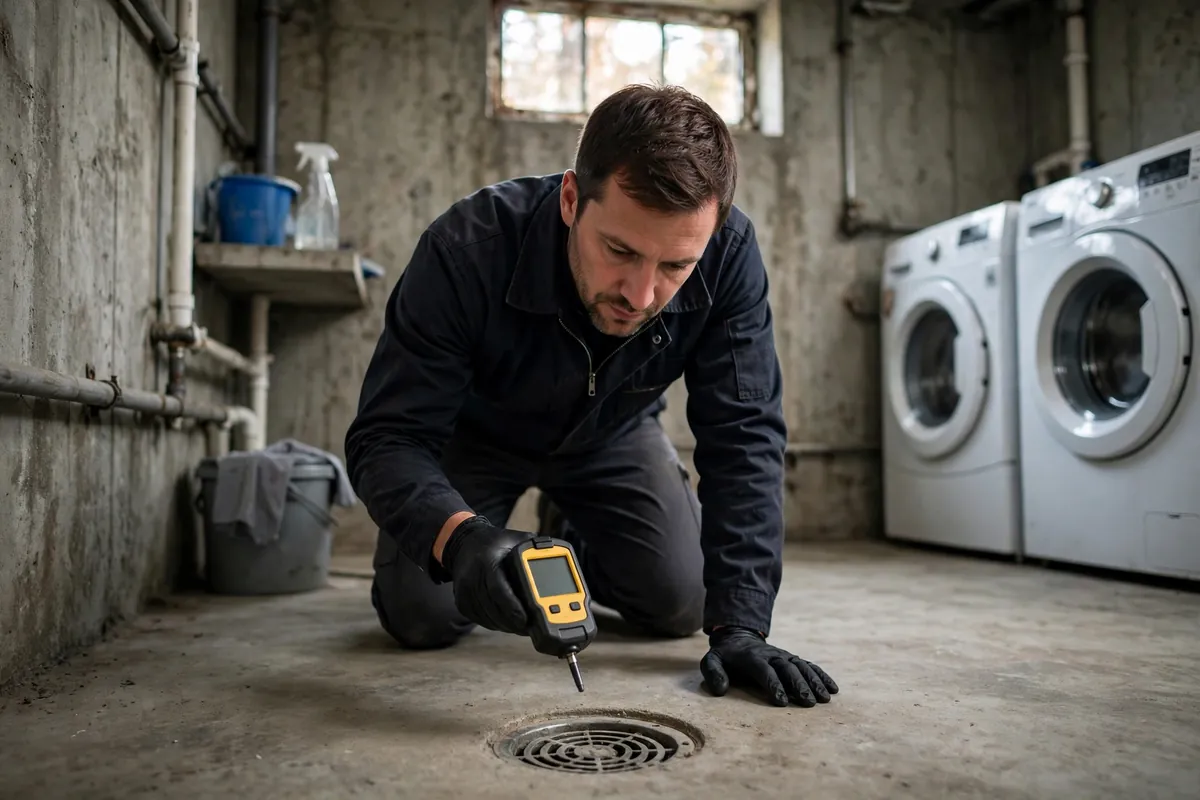
Worn wax rings under toilets, loose cleanout caps, and cracked drain pipes also admit gas. If the smell is strongest near one toilet or one section of basement, the source is likely a failed seal rather than a system-wide problem, and a sewer gas odor detection visit can pinpoint it without guesswork.
When the Smell Means a Bigger Problem
A faint occasional odor from one drain is usually a trap issue. A strong, persistent sewage smell throughout the house — especially combined with slow drains or gurgling — points to a compromised sewer line, such as a cracked lateral or a broken joint letting gas escape underground and migrate up through the foundation.
Outdoor sewer smells deserve the same seriousness. If your yard smells like sewage, the line itself may be leaking, which is both a health concern and an environmental one. Our guide on yard sewage odors explains how to track the source.
Do not mask the problem with air fresheners for weeks. Sewer gas is telling you something is wrong with the barrier between your home and the waste stream, and the underlying cause — whether a dry trap or a broken pipe — only gets more expensive with time.
What Professionals Do About Sewer Gas
A technician starts with the simple checks: trap water levels, toilet seals, cleanout caps, and roof vent condition. If those check out, the next step is often a smoke test, where harmless theatrical smoke is pushed into the drain system and watched for where it escapes — every wisp marks a leak.
For suspected underground problems, a camera inspection of the line in Bartlett shows cracks, separations, and root intrusions that release gas into the surrounding soil. Once the breach is located, the fix ranges from resealing a joint to lining or replacing the damaged section.
After the repair, the test is simple: the smell should be gone completely, not merely reduced. If an odor lingers after professional work, say so immediately — a proper fix eliminates the source, and a reputable technician will verify the result.