
Pipe Lining in Bartlett, IL
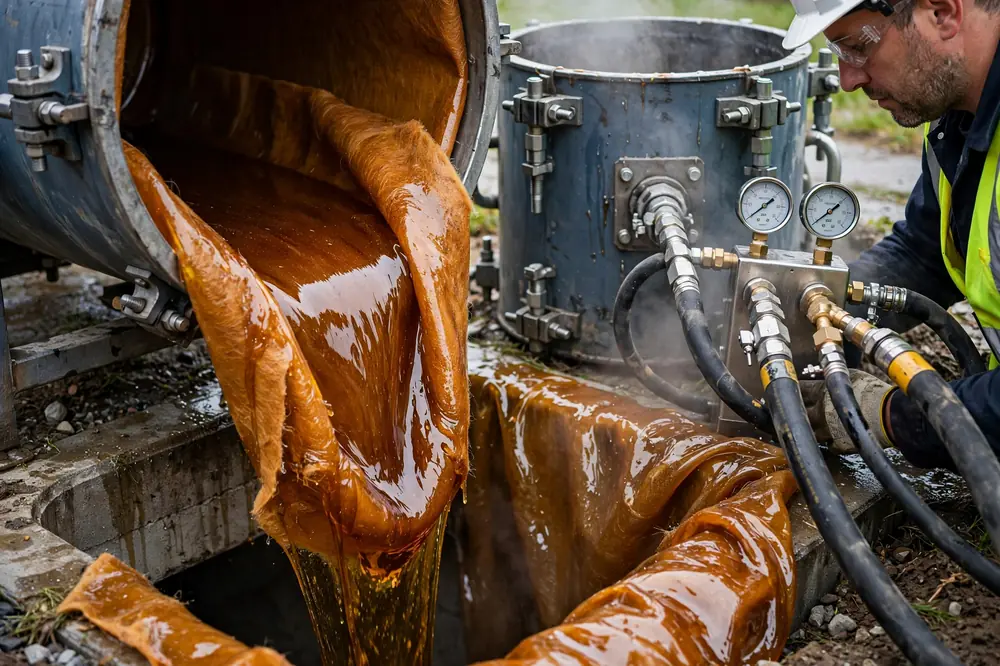
Pipe lining — cured-in-place pipe, or CIPP — renews a sewer lateral from the inside. A flexible liner saturated with resin is inserted into the existing pipe, pressed against the old pipe's interior, and cured with heat or UV light into a hard, smooth, jointless tube.
In short: Pipe lining installs a resin liner inside your Bartlett, IL 60103 sewer lateral and cures it into a smooth, jointless new pipe — no trench. The first step is a camera inspection to confirm the host pipe can hold a liner; call (833) 713-2101 to schedule one.
Pipe Lining
Pipe lining — cured-in-place pipe, or CIPP — renews a sewer lateral from the inside. A flexible liner saturated with resin is inserted into the existing pipe, pressed against the old pipe's interior, and cured with heat or UV light into a hard, smooth, jointless tube. The old pipe becomes a host; the liner becomes the pipe. No trench, no pipe removal, no landscape reconstruction — the renewal happens entirely within the line's existing footprint.
Lining shines where the pipe's shape survives but its integrity does not: cracked clay tile, separated joints admitting roots, cast iron roughened by scale, small offsets that still hold round. What lining cannot do is fix geometry — a collapsed section, a severe belly holding standing water, or a line installed at the wrong grade needs bursting or open replacement instead. That boundary is exactly what the camera inspection establishes, which is why lining is never quoted responsibly without footage first.
Signs Pipe Lining Fits Your Lateral
Lining needs a host pipe with shape. These camera findings make a line a lining candidate:
- Cracked pipe holding its shape — Longitudinal cracks and fractures where the pipe remains round are lining's ideal case — the liner bridges every crack and leaves a continuous new interior.
- Root intrusion at multiple joints — Cutting roots buys time; lining removes the entry points. One liner seals every joint along the run, which is why chronic root problems so often end with a lining recommendation.
- Separated or offset joints — Joints pulled inches apart by frost heave or soil movement — still roughly aligned — get bridged by the liner into a single smooth bore.
- Scale-roughened cast iron — Cast iron that has scaled internally but not collapsed gets a new lease: the liner covers the rough surface with a smooth interior that restores flow characteristics.
- Infiltration through cracks and joints — Groundwater seeping into the line through defects — visible on camera as running trickles — stops when the jointless liner seals the pipe wall.
- A sound line under irreplaceable surfaces — Where the surface above the lateral — a new driveway, a mature garden, a pool deck — makes any excavation painful, lining's zero-dig footprint is often the deciding factor.
How Pipe Lining Works, Step by Step
CIPP is chemistry plus craftsmanship. The steps, in order:
- 1
Camera inspection and liner design
The lateral is mapped: length, diameter, defect locations, branch connections. The liner is cut and calibrated to the run — length, diameter, and resin volume are job-specific, not off-the-shelf.
- 2
Thorough cleaning of the host pipe
Hydro jetting and mechanical cutters strip roots, scale, and debris so the liner bonds to the soundest possible surface. Liner adhesion depends on this step.
- 3
Liner insertion
The resin-saturated liner is inverted or pulled into place through an access point — often the existing cleanout — and positioned across the full repair run.
- 4
Curing
Hot water, steam, or UV light cures the resin into a hard structural pipe. Cure time depends on the resin system and run length; drains stay unused until the technician gives the all-clear.
- 5
Robotic reinstatement of connections
A robotic cutter reopens each branch connection — toilets, sinks, laundry — from inside the cured liner, restoring every fixture's path to the main.
- 6
Final camera verification
The camera travels the renewed line, documenting the smooth jointless interior and confirming every connection is open and the full run is continuous.
Equipment and Materials Used
Lining is a materials science as much as a trade:
- Felt or fiberglass liner tubes calibrated to the line's diameter and length
- Two-part epoxy or polyester resins mixed to the job's cure specifications
- Inversion drums or pull-in rigs that place the liner without wrinkling
- Curing systems: hot-water, steam, or UV-light rigs matched to the resin
- Robotic reinstatement cutters for reopening branch connections
- Push cameras for host-pipe assessment and final verification
The cured liner is a structural pipe in its own right — not a coating. Its jointless, root-resistant interior is what gives lined laterals their long second life.
Safety and Precautions
Resin handling defines lining safety. Uncured resin involves chemicals requiring ventilation, skin and eye protection, and careful mixing ratios — the crew controls the work area during wet-out and cure, and occupants stay clear until curing completes and the all-clear is given. The cure window also means a hard stop on drain use: running water into an uncured liner can ruin the installation, so the technician's timeline is not a suggestion.
As with any method, the host pipe must actually qualify — lining a collapsed or back-pitched line wastes the investment, which is why the pre-lining camera and cleaning are mandatory rather than optional. Homeowners should confirm the liner's expected performance in writing, understand the cure-time restrictions before work starts, and verify permit and inspection requirements with their municipality.
Lining and Bartlett-Area Pipe Conditions
Lining earns its keep in the area's clay-tile neighborhoods. Bloomingdale, Hanover Park, Glendale Heights, and Palatine carry 1960s–80s clay-tile laterals whose joints — pried by frost heave and packed with roots — are lining's textbook target: the pipe holds round, the joints have failed, and one liner seals them all. The glacial clay soil that shifted those joints keeps shifting, which makes the jointless result more valuable here than in stable ground.
Cast-iron scale is lining's other local specialty. Older homes in Elgin, West Chicago, and East Dundee run cast-iron laterals narrowed by decades of internal corrosion; where the pipe wall remains viable, lining restores a smooth bore without excavating deep, old-city lots. The judgment call — line it or burst it — comes down to the camera: shape intact means lining, shape lost means bursting. A local technician who has seen both outcomes on the same street makes that call with context, not just footage.
Pipe Lining Across the Service Area
Every community gets pipe lining — pick yours.
Pipe Lining in Addison
Pipe Lining in Addison 60101 — resin liner cured in place; jointless new line; postwar pipe by Salt Creek, Addison.
Pipe Lining in Bartlett
Pipe Lining in Bartlett 60103 — resin liner cured in place; jointless new line; newer PVC; wetland tables, Bartlett.
Pipe Lining in Bloomingdale
Pipe Lining in Bloomingdale 60108 — resin liner cured in place; jointless new line; transition-era pipe, Bloomingdale.
Pipe Lining in Carol Stream
Pipe Lining in Carol Stream 60188 — resin liner cured in place; jointless new line; planned PVC; industrial demand, Carol Stream.
Pipe Lining in East Dundee
Pipe Lining in East Dundee 60118 — resin liner cured in place; jointless new line; Fox River clay; 2000s PVC, East Dundee.
Pipe Lining in Elgin
Pipe Lining in Elgin 60120 — resin liner cured in place; jointless new line; century clay and iron, Elgin.
Pipe Lining in Elk Grove Village
Pipe Lining in Elk Grove Village 60007 — resin liner cured in place; jointless new line; Centex Orangeburg aging, Elk Grove Village.
Pipe Lining in Geneva
Pipe Lining in Geneva 60134 — resin liner cured in place; jointless new line; downtown clay; valley watch, Geneva.
Pipe Lining in Glendale Heights
Pipe Lining in Glendale Heights 60139 — resin liner cured in place; jointless new line; 1960s–70s cohort ending, Glendale Heights.
Pipe Lining in Hanover Park
Pipe Lining in Hanover Park 60133 — resin liner cured in place; jointless new line; 1970s clay and Orangeburg, Hanover Park.
Pipe Lining in Hoffman Estates
Pipe Lining in Hoffman Estates 60192 — resin liner cured in place; jointless new line; multi-era quadrants, Hoffman Estates.
Pipe Lining in Itasca
Pipe Lining in Itasca 60143 — resin liner cured in place; jointless new line; 1840s to 2010s pipe, Itasca.
Pipe Lining in Palatine
Pipe Lining in Palatine 60067 — resin liner cured in place; jointless new line; 60–150-year downtown clay, Palatine.
Pipe Lining in Rolling Meadows
Pipe Lining in Rolling Meadows 60008 — resin liner cured in place; jointless new line; 1950s–60s clay, Rolling Meadows.
Pipe Lining in Roselle
Pipe Lining in Roselle 60172 — resin liner cured in place; jointless new line; 1970s Orangeburg window, Roselle.
Pipe Lining in Schaumburg
Pipe Lining in Schaumburg 60193 — resin liner cured in place; jointless new line; Woodfield transition; I-90, Schaumburg.
Pipe Lining in South Elgin
Pipe Lining in South Elgin 60177 — resin liner cured in place; jointless new line; youngest stock, precision, South Elgin.
Pipe Lining in St. Charles
Pipe Lining in St. Charles 60174 — resin liner cured in place; jointless new line; three-era Fox mosaic, St. Charles.
Pipe Lining in Streamwood
Pipe Lining in Streamwood 60107 — resin liner cured in place; jointless new line; Orangeburg risk; shape first, Streamwood.
Pipe Lining in Wayne
Pipe Lining in Wayne 60184 — resin liner cured in place; jointless new line; estate laterals; vintage clay, Wayne.
Pipe Lining in West Chicago
Pipe Lining in West Chicago 60185 — resin liner cured in place; jointless new line; century railroad-core pipe, West Chicago.
Pipe Lining in Wood Dale
Pipe Lining in Wood Dale 60191 — resin liner cured in place; jointless new line; 1960s–70s; Salt Creek floodplain, Wood Dale.
Pipe Lining FAQs
How long does a cured-in-place liner last?
A properly installed structural liner is a long-term renewal — the jointless, corrosion-proof interior eliminates the failure modes that ended the original pipe's life. Ask the provider about the specific liner system's expected performance and any written terms.
Does lining reduce the pipe's diameter?
Slightly — the liner sits inside the old pipe, so the bore narrows by the liner's wall thickness. In practice the smooth new interior flows as well or better than the old rough, scaled, or root-choked pipe it replaces.
Can every connection be reopened after lining?
Yes. The robotic reinstatement cutter reopens each branch connection from inside the cured liner, and the final camera run verifies every fixture's path is open before the crew leaves.
What if part of my line has collapsed?
Collapsed sections cannot be lined — the liner needs a host pipe with shape. Options are bursting through the collapsed run or open replacement of that section, sometimes combined with lining the sound remainder.
How soon can I use my drains after lining?
Only after the cure completes and the technician gives the all-clear. The timeline depends on the resin system and run length — typically hours, not days — and using drains early can damage the uncured liner.
Sewer Line Problems Don’t Wait. Neither Should You.
One call connects you with a local pipe lining specialist for Bartlett, IL and nearby communities — day or night, 24/7.
(833) 713-2101Free to call · No obligation · 24/7 emergency line
Serving Bartlett, IL and surrounding suburbs