
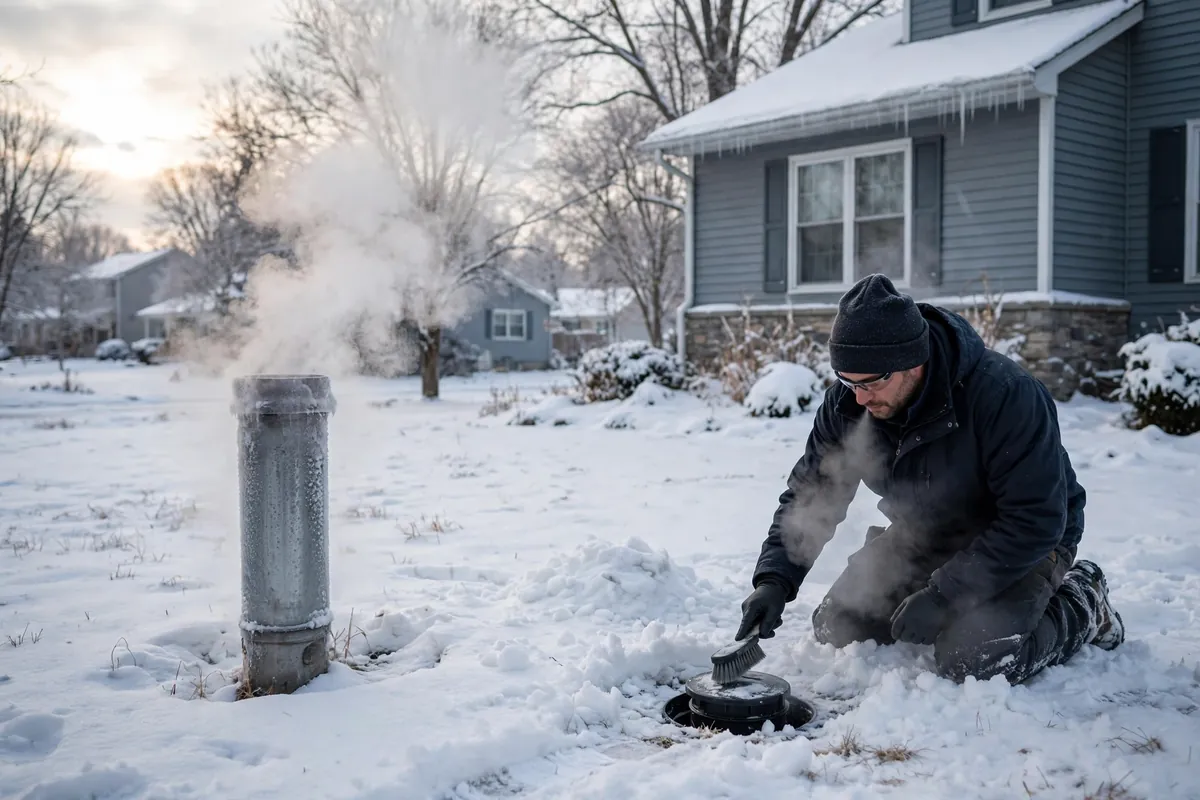
How Sewer Lines Freeze in Northern Illinois
Most people assume sewer water stays warm enough to keep flowing, and in a deep, well-pitched line it usually does. The trouble starts when a lateral runs shallow, carries grease buildup, or drains slowly enough that water sits in the pipe. During a week of sub-zero nights, frost in the Chicago suburbs can drive three feet or more into the soil, reaching laterals that were buried to minimum code decades ago.
Grease is the silent partner in nearly every frozen sewer call. Fats, oils, and grease cool as they travel, coating the inside of the pipe and narrowing the channel. A narrowed pipe holds water longer, and standing water is what freezes. Homes that pour cooking grease down the kitchen sink in December are setting up a February emergency.
Low water use can also contribute. If a house sits empty for a week during a cold snap, or the occupants travel for the holidays, nothing warm flows through the line to keep it clear. Vacant and vacation homes in the Bartlett area see a disproportionate share of freeze-related sewer backups for exactly this reason.
Warning Signs Your Sewer Line Is Freezing
A freezing lateral announces itself in stages. First, every drain in the house slows down at the same time — kitchen, showers, and toilets all sluggish together is a main-line symptom, not a single-fixture clog. If the slowdown arrives during or right after a hard freeze, temperature is the prime suspect.
Gurgling is the next clue. When ice narrows the pipe, air gets trapped and pushed back through traps, so toilets bubble and tub drains gurgle when a nearby fixture drains. Some homeowners also notice the lowest drain in the house — usually a basement floor drain or laundry tub — backing up first, because that is where restricted flow surfaces first.
One important distinction: a frozen line affects the whole house and correlates with cold weather. If only one sink is slow on a mild day, you are dealing with a local clog, not a freeze. Paying attention to that difference saves you from paying for the wrong fix.
Which Bartlett Homes Are Most at Risk
Age and depth are the two biggest risk factors. Many mid-century homes around Bartlett have laterals buried at the minimum depth allowed when they were built, and decades of soil settling or regrading can leave parts of the line even shallower. If your home still has its original clay or cast-iron lateral, the joints themselves can admit groundwater that freezes inside the pipe.
Unheated crawl spaces and additions matter too. Where a lateral passes through or near an unconditioned space, wind chill reaches the pipe directly. Garages converted into living space with plumbing extended through cold walls are another classic freeze point that a sewer line camera inspection can reveal before winter arrives.
Yards that were regraded, repaved, or had soil removed for landscaping sometimes expose more pipe to frost than the original installation intended. If your driveway or patio was redone in the last few years and winter drainage problems started after, the two may be connected.
What to Do If You Suspect a Frozen Sewer Line
Stop adding water to the system immediately. Every flush and every load of laundry raises the water level behind the ice and increases the chance of a backup into the lowest drain. Tell everyone in the house to minimize water use until the line is evaluated.
Do not pour boiling water, drain cleaner, or antifreeze into your drains. Boiling water can crack porcelain and warp PVC fittings, chemical cleaners do nothing to ice and create a hazard for whoever eventually works on the line, and antifreeze is an environmental problem you do not want in the municipal system. Thawing a buried line is not a DIY job.
Call for emergency sewer repair help if water is backing up, and schedule a camera inspection once flow is restored. The inspection matters because freezing often exposes an underlying problem — a belly, a cracked joint, or grease buildup — that will freeze again next January if it is not addressed.
Preventing Frozen Sewer Pipes This Winter
The single most effective prevention is fixing slow drains before the first hard freeze. A line that drains freely has far less standing water to freeze, so a professional line cleaning in Bartlett in late fall removes the grease and scale that ice needs as a starting point. Think of it as winterizing your sewer the way you winterize your hose bibs.
Keep the house heated even when you travel, and never let the thermostat drop near freezing for the sake of a utility bill. For fixtures in cold additions, letting a faucet trickle on the coldest nights keeps warm water moving through the branch lines, though it will not save a deeply frozen main.
Finally, be strict about grease all winter. Wipe pans with a paper towel before washing, collect cooking oil in a container for the trash, and run hot water after dishwashing. These small habits do more to prevent freeze-ups than any product sold in a hardware store aisle.