
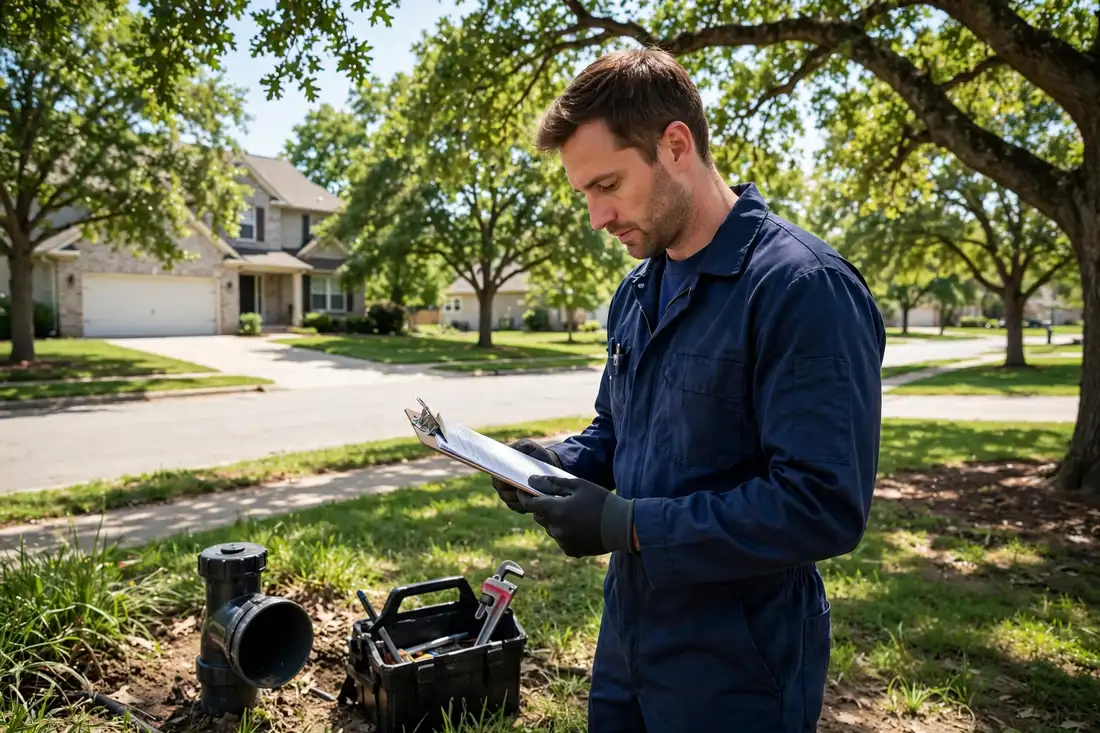
Fall: Inspect and Prepare (September-November)
Fall is the most important maintenance season because it sets up everything that follows. Schedule a camera inspection if your line is older, has a history of problems, or has never been inspected — the footage becomes your baseline, and any developing issue gets caught while the ground is still workable.
Follow the inspection with cleaning if the camera shows buildup. A fall professional sewer line cleaning removes the summer's grease and root accumulation before winter, when cold pipes and slow flow turn buildup into blockages. Think of it as draining the swamp before it freezes.
Fall is also paperwork season: locate your cleanout, confirm it is accessible, and file this year's service records. If the inspection revealed a repair need, schedule it now — contractors have availability, the ground is diggable, and you will face winter with a sound line.
Winter: Protect and Restrict (December-February)
Winter maintenance is mostly about discipline, not service calls. Keep grease out of drains religiously — cold pipes congeal it fastest in exactly the months when a blockage is hardest to fix. Maintain heat in all plumbed areas, including rarely used bathrooms and additions, and never let the house go cold during travel.
Watch for the freeze signals: whole-house slowdowns during cold snaps, gurgling that correlates with sub-zero nights, and backups that appear only in deep winter. These symptoms point to freezing or frost-exacerbated restrictions, and they deserve a call, not a wait-and-see approach.
Resist DIY thawing experiments. Boiling water, chemicals, and improvised heating around buried lines risk pipe damage, personal injury, or both. If a freeze is suspected, professional assessment is the move — and the fall preparation above is what makes winter emergencies rare.
Spring: Roots and Rain (March-May)
Spring brings the year's two biggest sewer stresses: explosive root growth and heavy rains. April and May are peak intrusion months as trees leaf out, so spring is when you watch for the seasonal slowdown pattern — drains that were fine in winter gradually slowing as roots surge.
Heavy spring rains test the line differently, revealing infiltration through cracks and joints as groundwater forces its way in. Backups that correlate with downpours, or a sump area working overtime, suggest the line is admitting groundwater — a structural issue, not just a clog.
Schedule spring clearing if roots are your line's recurring story, and consider it the season for follow-up camera work: a spring inspection shows exactly what winter's freeze-thaw did to joints and cracks, giving you the evidence to plan summer repairs. A tree root removal visit in Bartlett each spring breaks the annual cycle before it becomes an emergency.
Summer: Repair and Improve (June-August)
Summer is construction season — warm ground, long days, and contractor availability make it the ideal window for the repairs that fall, winter, and spring diagnosed. Lining, bursting, and excavation all proceed fastest in summer conditions, and you avoid the premium stress of emergency winter work.
Use summer for improvements too: installing a backwater valve if backups have recurred, adding root barriers near the lateral, or replacing that aging clay section the camera flagged two falls ago. Preventive projects done in July cost the same as in January but disrupt far less.
Summer is also the season to review the year's records. Compare this fall's upcoming camera run against last year's baseline — stable footage means the plan is working; new defects mean the plan needs adjusting. Maintenance is a feedback loop, not a fixed ritual.
Service Agreements vs. the Calendar Approach
Paid maintenance agreements bundle scheduled cleanings and inspections, sometimes with priority scheduling and plan-holder perks. For homes with older lines, heavy tree cover, or a history of problems, the enforced regularity has real value — the plan happens whether you remember or not.
But evaluate any agreement against the calendar above, not against fear. Does it include a fall camera inspection or just cleanings? Does it cover the line to the street or only to the cleanout? Are the visit intervals matched to your line's actual condition, or one-size-fits-all? The answers determine whether the agreement serves your line or just your anxiety.
The DIY version of the plan costs nothing but attention: fall inspection every year or two, winter discipline, spring watchfulness, summer action on findings. Whichever route you choose, the seasonal rhythm is what protects the line — the contract is just a way to outsource the remembering. Call (833) 713-2101 to discuss what schedule fits your home's line.