
Habits 1-3: Control What Goes Down the Drain
Habit one: never pour cooking grease down any drain. Grease is the leading cause of residential sewer blockages, and it does its worst damage in winter when cold pipes congeal it faster. Wipe pans with a paper towel, pour used oil into a sealed container for the trash, and run hot water with dish soap after greasy dishwashing.
Habit two: treat your toilets as toilets only. ‘Flushable’ wipes do not disintegrate like toilet paper — they snag on joints and roots and form the core of most modern blockages. Feminine products, paper towels, dental floss, and cotton swabs belong in the trash, full stop. Every plumber's camera has a highlight reel proving this point.
Habit three: use sink strainers and clean them. Hair and food particles that slip past an unguarded drain accumulate at every joint and belly downstream. A two-dollar strainer and ten seconds of emptying it into the trash keeps pounds of debris out of your lateral every year.
Habits 4-6: Watch, Listen, and Act Early
Habit four: fix slow drains in fall, not February. A drain that is sluggish in September will be a frozen or fully blocked line in January, because slow flow means standing water and standing water means ice. Fall sewer line cleaning before the first hard freeze is the highest-impact maintenance a Bartlett homeowner can buy.
Habit five: learn your line's normal sounds and smells. Gurgling after the washing machine drains, a faint sewage odor in the basement after heavy rain, a toilet that bubbles when the tub empties — these are early warnings, and noticing them in fall gives you months to act before winter locks the ground.
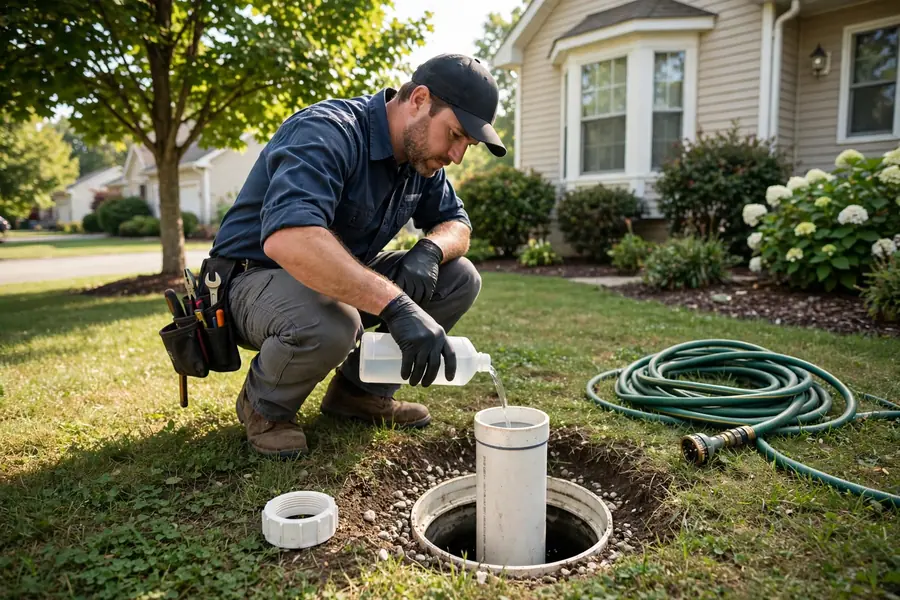
Habit six: know where your cleanout is and keep it accessible. The capped pipe — usually in the yard near the house or in the basement — is the technician's front door to your line. A cleanout buried under landscaping or a new deck turns a one-hour service call into a half-day excavation of your own yard.
Habits 7-9: Seasonal and Long-Term Care
Habit seven: give older lines a fall camera check. If your lateral is clay, cast iron, or of unknown age and material, a camera inspection in Bartlett every couple of falls establishes a video baseline and catches developing cracks, root intrusions, and bellies while they are still small, cheap problems.
Habit eight: manage trees near the line. Fall is ideal for root-barrier installation and for planning spring removals of aggressive species planted over the lateral's path. You do not have to choose between your trees and your sewer — you just have to manage the distance between them.
Habit nine: keep records. Save every service receipt, every camera video, and the dates of every clearing. A documented maintenance history helps future technicians diagnose faster, supports insurance claims, and proves to future buyers that the home's hidden infrastructure was cared for. Start the file this fall — call (833) 713-2101 for the inspection that begins it.
Bonus: Your Fall Weekend Sewer Checklist
Block out one Saturday morning in October and walk through this list: run water in every rarely used drain to refill traps, check that the cleanout cap is intact and accessible, and pour a kettle of hot — not boiling — water down the kitchen drain to melt the week's grease film. None of this requires tools, and together it closes the small gaps that become winter problems.
Then take the outdoor lap: look for new soggy spots or depressions along the lateral's path to the street, note any trees whose roots may have advanced over summer, and make sure downspouts direct roof water away from the area above the line. Saturated soil over a sewer lateral accelerates every failure mode the camera might later find.
Finish with the phone work: if any drain has been slow, if the line is older or unknown, or if last winter brought any gurgling, schedule the fall inspection now while calendars are open. Ninety minutes of attention in October is what stands between a quiet winter and a February emergency — and it starts with a single call to (833) 713-2101.