
How Cable Cleaning Works
Cable cleaning — often called snaking or rodding — feeds a flexible steel cable with a cutting head into the line through a cleanout. The rotating head bores through the blockage, breaking it apart so flow can resume. It is the traditional workhorse of drain service and handles most common clogs effectively.
The strength of cable cleaning is punching through. A root mass, a wad of wipes, or a compacted clog gets chewed open and flushed downstream. For a first-time blockage with no history of trouble, a cable clearing is usually the fastest and most economical answer.
The limitation is what it leaves behind. A cable cuts a path roughly the diameter of its head through the obstruction, but it does not scrub the pipe walls. Grease coatings, mineral scale, and sludge layers remain, which is why a line cleared by cable alone sometimes slows again within months.
How Hydro Jetting Works
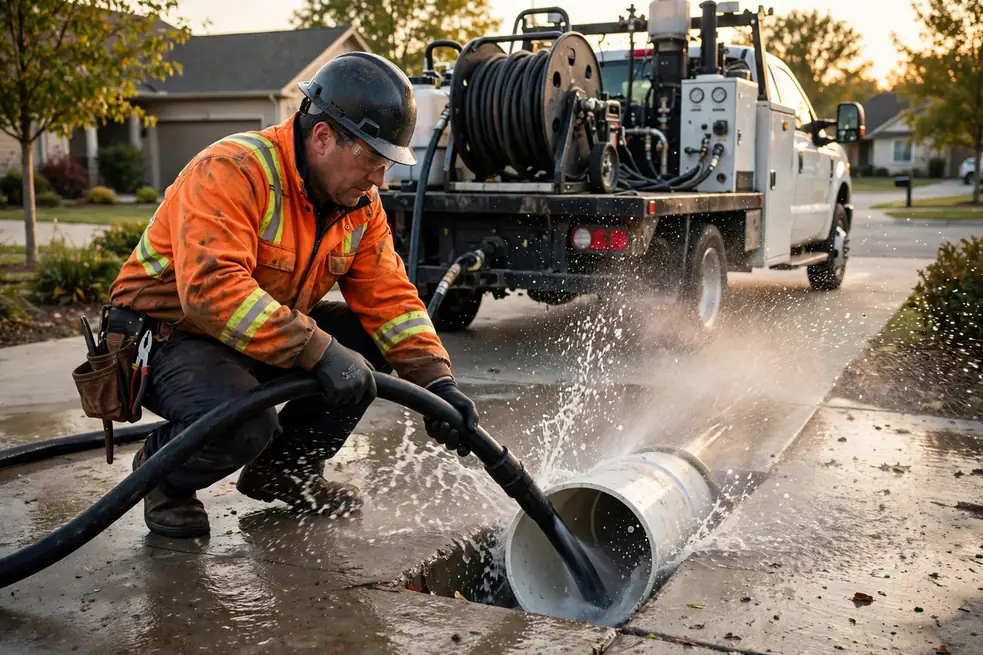
Hydro jetting sends water through the line at pressures up to several thousand PSI through a specialized nozzle that fires jets forward and backward. The forward jets break up the blockage while the rear jets scour the full circumference of the pipe wall and pull the nozzle — and the debris — back toward the access point.
The result is a pipe cleaned to near-original diameter, not just a hole punched through a clog. Grease that a cable would smear aside gets blasted off the walls and flushed out. Scale, sand, silt, and sludge that accumulate over years come out with the water.
Jetting is also the most effective preparation for trenchless rehabilitation. Pipe lining and pipe bursting both require a clean host pipe for proper results, and contractors routinely jet a line immediately before lining it. If your long-term plan involves relining, jetting first is not optional — it is part of the process.
Which Buildup Each Method Handles
Match the method to the material. Soft blockages — toilet paper, wipes, sanitary products, small root intrusions — respond well to cable cleaning. These are discrete obstructions, and boring through them solves the problem.
Grease, scale, and sludge are jetting territory. These coat the pipe walls in layers that a cable head passes through without removing, like punching a hole in wallpaper instead of stripping it. If your kitchen line slows every few months despite clearings, grease layering is the likely story and jetting is the real fix.
Heavy root intrusions often need both: cutting to open the mass, then jetting to flush the debris and scour the joint where the roots entered. A good technician will tell you when the combination is warranted rather than selling either method alone. Our hydro jetting page details the process and its applications.
When Jetting Is Not the Right Choice
Hydro jetting is powerful, and power demands respect for fragile pipe. In a line with known collapses, severe offsets, or crumbling Orangeburg, high-pressure water can worsen the damage or wash supporting soil out through the breach. This is why reputable companies camera-inspect before jetting a line with an unknown condition.
Very old, heavily corroded cast iron also calls for caution. If the pipe wall is already paper-thin from crown corrosion, aggressive jetting can blow through it. A professional assesses the pipe's condition first and adjusts pressure — or recommends a different approach — accordingly.
Cost is the practical consideration. Jetting typically costs more than a cable clearing because of the equipment involved. For a simple, first-time clog in an otherwise healthy line, paying for jetting is overkill. The right method is the least aggressive one that actually solves your specific problem.
Making the Decision for Your Bartlett Home
Start with history. One isolated clog with no prior trouble? Cable cleaning is the sensible first step. Recurring slowdowns, grease-related kitchen issues, or a line that has been cleared before and slowed again? Jetting addresses the wall buildup that cable clearing leaves behind.
Ask for a camera inspection either way. Seeing the inside of your line turns the choice from a guess into an evidence-based decision, and the footage documents the pipe's condition for future reference. Many homeowners are surprised by what the camera reveals — sometimes the line is cleaner than expected, sometimes far worse.
For a thorough seasonal reset, consider scheduling a hydro jetting service in Bartlett in spring, when winter grease accumulation is at its peak and before summer root growth adds a second problem. One comprehensive cleaning per year prevents most of the emergencies that fill summer schedules — call (833) 713-2101 to discuss what your line needs.