
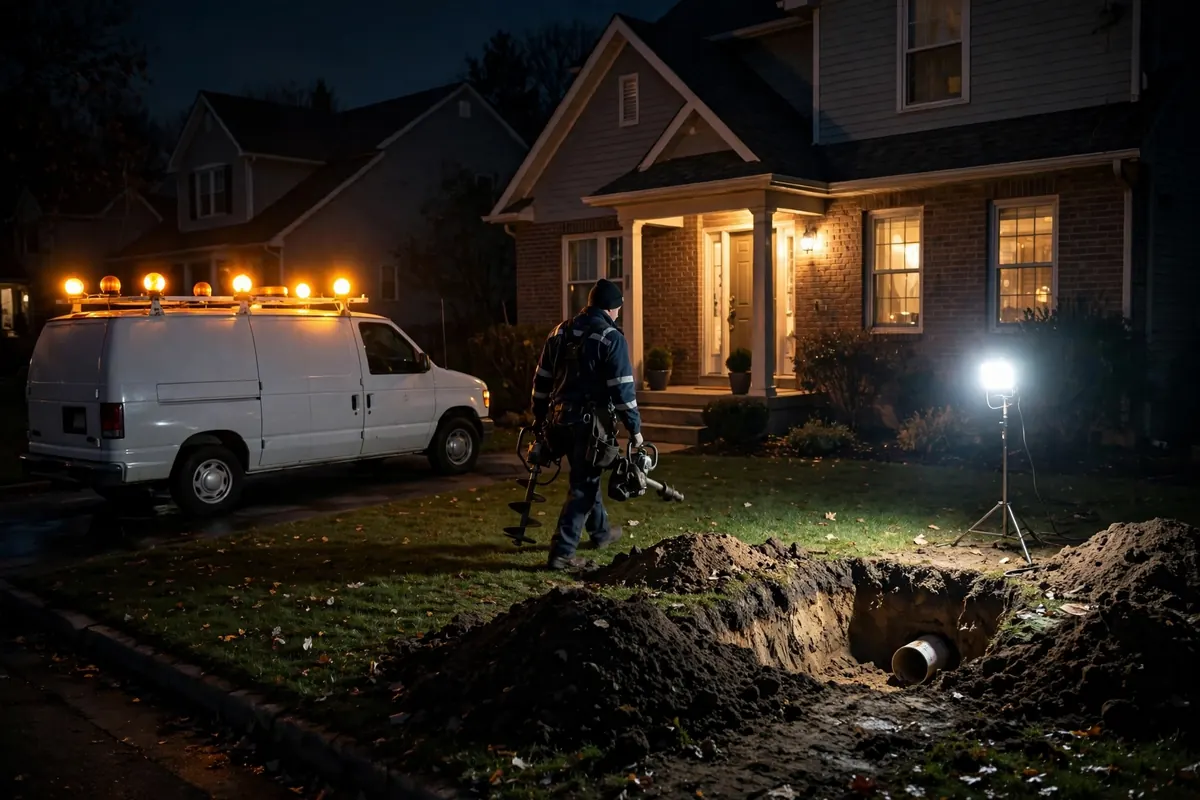
When It Qualifies as an Emergency
Not every sewer problem needs a midnight response, so here is the line: sewage actively entering your living space is always an emergency. So is a complete drainage failure where no fixture in the house drains — that means the main line is fully blocked and the next flush goes onto the floor.
Strong sewage odor combined with drainage failure also qualifies, because it signals a major breach or blockage affecting the whole system. And any backup involving electrical panels, furnaces, or water heaters in the affected area is urgent for safety reasons beyond the plumbing.
What is not an emergency: a single slow drain, a faint occasional odor, or a gurgling toilet with everything still draining. Those deserve prompt attention — schedule a visit this week — but they can wait for business hours. Knowing the difference saves you emergency rates for non-emergencies.
The Call: What the Dispatcher Needs to Know
When you call (833) 713-2101, expect focused triage questions, not a sales pitch. The dispatcher will ask which fixtures are affected, whether sewage is actively backing up or just draining slowly, whether you have a basement and if it is affected, and what you have already tried.
Answer precisely — ‘the basement floor drain is overflowing and the first-floor toilet gurgles when it happens’ gets you the right equipment on the truck, while ‘the drains are bad’ might not. Mention any known history: previous backups, recent work in the yard, or an aging line you have been watching.
You will also get immediate guidance: stop using water, keep clear of the affected area, and locate your cleanout if you can do so safely. That two-minute coaching limits the damage before the truck even rolls, and it is part of what a good emergency response includes.
Arrival and Immediate Diagnosis
On arrival, the technician's first job is stopping the damage, not selling a project. That means assessing the backup's source and severity: checking the cleanout to see if the blockage is in your lateral or beyond, and determining whether flow can be restored quickly or the situation needs containment first.
Professional equipment comes out fast: drain machines to cut through the immediate blockage, jetters for grease and sludge, and extraction awareness for standing sewage. The goal of this phase is restoring flow and stopping the backup — the permanent fix comes after the emergency is stabilized.
Expect straight talk about what is found. A good emergency technician tells you what the blockage was, where it sat, and what it suggests about the line's condition — roots at a joint, grease through the run, a foreign object — because that finding shapes everything that follows.
Temporary Fix vs. Permanent Repair
Understand the two phases: the emergency visit restores function, and a follow-up visit delivers permanence. Clearing a root blockage at midnight gets your plumbing working; the camera inspection and the lining or repair scheduled next week keep it working. Both phases matter, and confusing them leads to repeat emergencies.
The camera inspection is the bridge between the phases. Once flow is restored, the camera shows exactly what caused the emergency — and whether it will happen again without structural work. Emergency visits that skip this step treat every backup as a surprise, which is how homeowners end up calling twice a year.
For the permanent phase, the options are the standard ones: cleaning and maintenance for buildup-driven lines, pipe relining or bursting for structural damage, excavation where required. The emergency gave you the symptom; the camera gives you the plan; the follow-up gives you the fix.
After the Emergency: Protecting the Recovery
In the days after, document everything for insurance while it is fresh — photos, the service invoice, the camera video — even if you are unsure about filing. Documentation kept is options kept; documentation skipped is leverage lost.
Schedule the follow-up camera inspection if one was not done during the emergency visit, and act on its findings promptly. The highest-risk period for a repeat backup is the weeks after a clearing, when the underlying cause is still in place and confidence is falsely restored. Do not let the quiet lull you.
Finally, convert the scare into a system: fall inspections, grease discipline, and knowing your cleanout location turn a one-time emergency into a never-again story. For emergency sewer repair in Bartlett — the immediate response and the permanent follow-through — call (833) 713-2101, and keep the number where the whole household can find it.