Tree Roots in Your Sewer Line: Why It Happens and How to Stop It
Tree roots cause most sewer line blockages in older suburbs. Learn why roots target your pipe, how pros remove them, and how to keep them out for good. · 8 min read
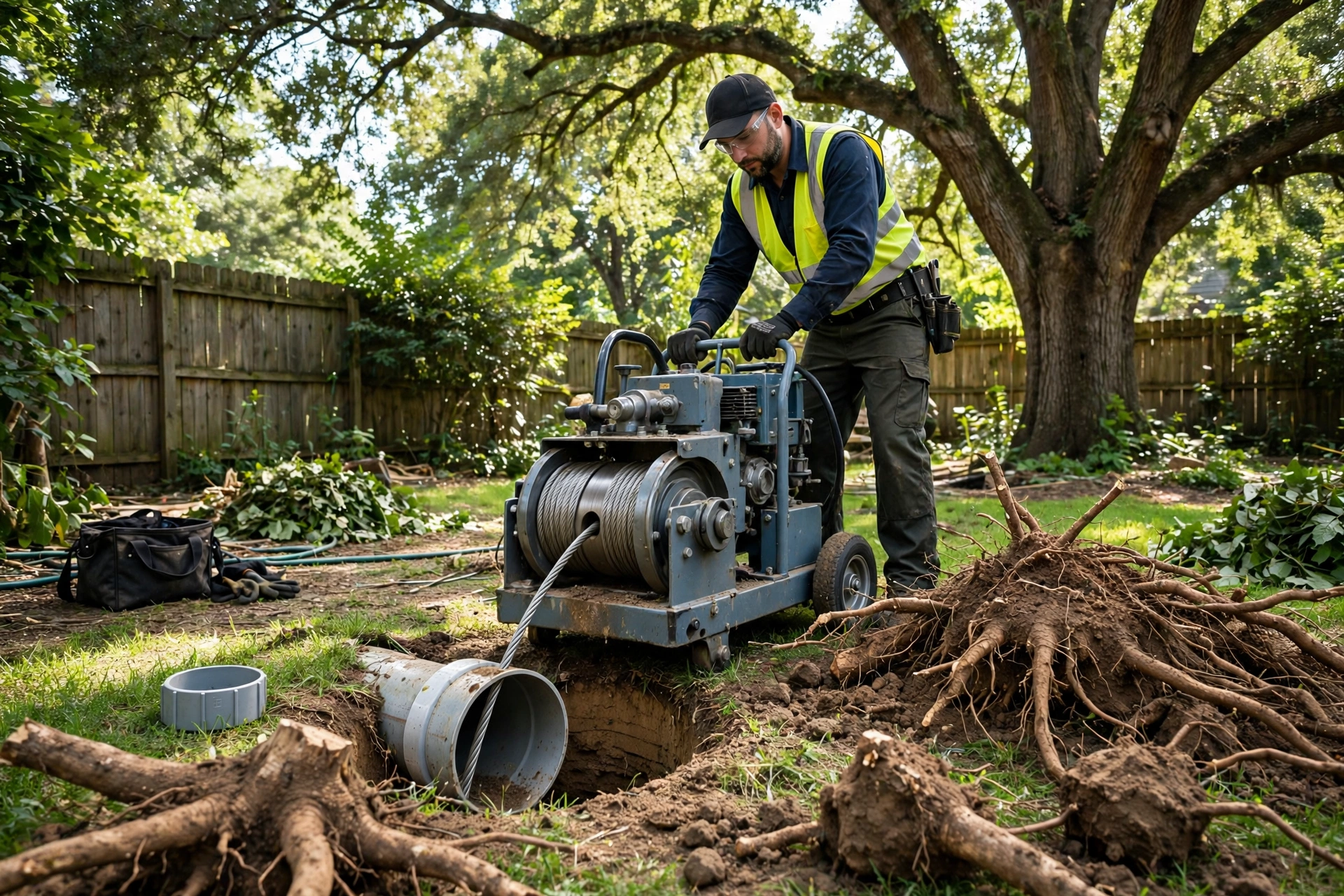
If your home was built before the 1990s, there's a good chance your sewer lateral is clay tile or cast iron with joints every few feet — and every one of those joints is an invitation to tree roots. Roots don't need much: a hairline gap and the moisture and nutrients inside a sewer line, and they'll push in, grow, and eventually choke the pipe.
Why roots love sewer lines
Roots grow toward water. A sewer line is a constant underground stream, and older pipe joints — especially clay tile bells — leak just enough moisture to attract them. Once inside, roots thrive on the nutrients and expand, cracking joints wider and catching debris until the line blocks.
Which trees are the worst offenders
Fast-growing, thirsty species cause the most trouble: silver maples, willows, elms, and cottonwoods top the list. But any large tree within 20–30 feet of your lateral is a candidate. The mature parkway trees lining many northwest-suburb streets are a common source.
How professionals remove roots
We feed a specialized root-cutting head — a spinning cable with sharp blades — through the line, shredding the root mass and restoring full flow. For heavy infestations we follow up with hydro jetting to scour the pipe walls clean. It's same-day work in most cases.
Removal isn't the end of the story
Cutting buys time, but roots grow back — usually within 12–24 months. The permanent fix is eliminating the entry points: trenchless pipe lining creates a seamless new pipe inside the old one with no joints for roots to exploit, and pipe bursting replaces the line entirely. That's why we recommend a camera inspection after root removal to check the pipe's condition.
Prevention tips that actually work
Know where your lateral runs before planting new trees. Keep thirsty species well away from the line. Schedule a camera inspection every couple of years if you have mature trees nearby — catching root intrusion early keeps it a cleaning job instead of a replacement job.
When roots have won
If the pipe is cracked apart or collapsed from root pressure, no amount of cutting will save it. At that point, pipe bursting or pipe lining gives you a root-proof line without digging up the tree that caused the problem. Call (833) 713-2101 and we'll scope the line and lay out your options honestly
Not sure what your line needs?
A camera inspection gives you the answer in under an hour.
Call (833) 713-2101Questions About This Topic
Chemical root killers can slow regrowth between professional cleanings, but they can't clear an established blockage or repair cracked pipe. Use them as maintenance, not as a cure.
With no permanent repair, expect to need cleaning every 1–2 years. After lining or bursting, the problem is gone for good.
Yes — we work from inside the pipe, so the tree itself is untouched. Only the roots inside the line are cut.
Get Your Free Estimate Today
One call is all it takes. Talk to a sewer line specialist, get honest answers, and schedule service that fits your day.
Call Now: (833) 713-2101- Free Consultation
- Same-Day Service
- Expert Technicians