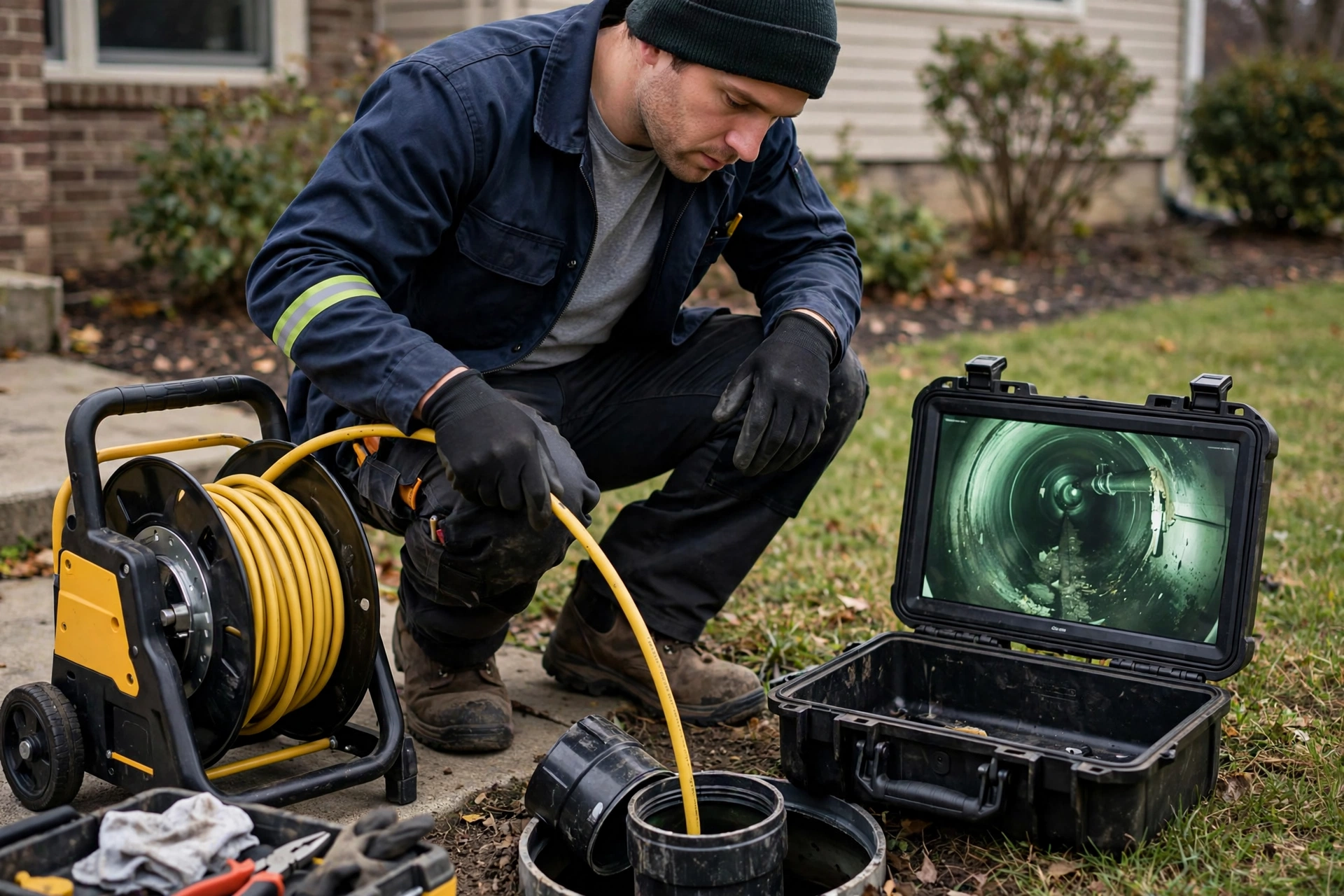
One bad joint or a failing line? The repair-vs.-replace decision hinges on the pipe's overall condition — not just the current symptom.
When Spot Repair Makes Sense
Spot repair — fixing a single section — is the right call when a camera inspection shows one isolated problem in an otherwise sound line. Examples: a single root intrusion at one joint, one cracked section in modern PVC, or damage from a specific event like construction impact. If the rest of the lateral is in good shape with decades of life left, replacing the whole thing wastes money.
When Replacement Is the Smarter Investment
- Multiple failure points: Roots at five joints, not one
- Systemic material failure: Orangeburg pipe delaminating along its length, or cast iron scaled shut throughout
- Repeated repairs: If you have paid for two or more spot fixes and problems return, the line is telling you something
- Bellies and grade issues: Sagging sections that hold waste cannot be spot-fixed into proper slope
- Age plus condition: A 60-year-old clay line with moderate damage will not improve with time
The Math That Matters
Compare the cost of the spot repair against the likelihood of future repairs. A low-cost spot fix on a line likely to need two more within five years is worse economics than a one-time trenchless replacement. Ask your contractor for an honest assessment: "If this were your house, would you patch it or replace it?" In Bartlett, where clay-heavy glacial soil and freeze-thaw winters age pipes aggressively, the replacement threshold comes sooner than in milder regions.
Trenchless Changes the Equation
Replacement used to mean a trench through the yard — expensive and disruptive enough to favor patching. Trenchless bursting and lining have narrowed the cost and disruption gap dramatically. When full replacement costs only moderately more than repeated spot repairs, the one-and-done solution usually wins.
Common Mistakes Homeowners Make
The biggest mistake is ignoring early warning signs. A slow drain that clears with plunging feels resolved, but if the underlying cause is root intrusion or a developing belly, the problem returns worse each time. Another frequent error is hiring based on price alone — the cheapest quote often skips the camera inspection, meaning the contractor is guessing at the problem. In Bartlett, where clay-heavy glacial soil and freeze-thaw winters create specific failure patterns, local experience matters more than a low bid.
Homeowners also err by flushing so-called "flushable" wipes, pouring grease down kitchen drains, or planting thirsty trees directly over the lateral path. Each of these shortens the line's life measurably. A little prevention — knowing where your lateral runs, keeping wipes out, and scheduling periodic inspections — avoids most emergencies.
Frequently Asked Questions
How do I know if my Bartlett home needs this service?
Watch for the classic indicators: recurring slow drains, gurgling sounds, sewage odors, or unusually lush patches in the yard. If your home has established suburbs with 1970s-90s construction, a camera inspection is the definitive way to assess the lateral's condition rather than guessing.
Can I handle this as a DIY project?
Minor maintenance like keeping drains clear of grease is fine for homeowners. But anything involving the main lateral — inspection, cleaning with professional equipment, or repair — requires licensed professionals with specialized tools. Mistakes on a sewer lateral can create health hazards and expensive damage.
How long does the work typically take?
Most diagnostic visits and cleanings complete in a few hours. Trenchless repairs usually finish in one to two days. Full replacements depend on length and method but rarely exceed a week for residential properties in Bartlett.
Will my yard be torn up?
Not necessarily. Trenchless methods were developed specifically to avoid excavation. Even when some digging is needed, professional crews restore the surface afterward. Ask your contractor exactly what restoration is included before work begins.
How do I choose the right contractor in Bartlett?
Verify licensing and insurance, read local reviews, and insist on a camera inspection before accepting a repair quote. A reputable contractor explains your options — including doing nothing yet, if the line is sound — rather than pressuring an immediate decision. Call (833) 713-2101 for an honest evaluation.
Get an Evidence-Based Recommendation
Key Takeaways for Bartlett Homeowners
- Do not ignore early warning signs — small sewer issues become expensive emergencies when neglected, especially with clay-heavy glacial soil and freeze-thaw winters accelerating deterioration.
- Always get a camera inspection before authorizing major work; video evidence protects you from unnecessary repairs and helps you compare quotes fairly.
- Ask every contractor about trenchless options — in Bartlett, where established suburbs with 1970s-90s construction, minimally invasive methods often save both money and landscaping.
- Keep records of all inspections, cleanings, and repairs; documentation helps with insurance claims, property sales, and warranty enforcement.
- Build a relationship with a trusted local sewer specialist before an emergency strikes — having a known, reliable number saves panic-driven decisions at 2 AM.
Your sewer lateral is out of sight, but it should not be out of mind. Proactive attention — a periodic inspection, mindful drain habits, and prompt response to warning signs — keeps this critical system working quietly for decades. If you have questions about your Bartlett sewer line or want a professional assessment, call (833) 713-2101 today.
Never decide without seeing the camera footage yourself. A trustworthy contractor shows you the video, explains each defect, and gives you both options with honest pros and cons. For a no-pressure second opinion in Bartlett, call (833) 713-2101.
Need help with your sewer line in Bartlett? Our team provides honest diagnostics and lasting repairs. Call (833) 713-2101 today.